
Cold Room Doors: 7 Signs Yours Is Costing You Money Every Day
-
October 28th, 2026
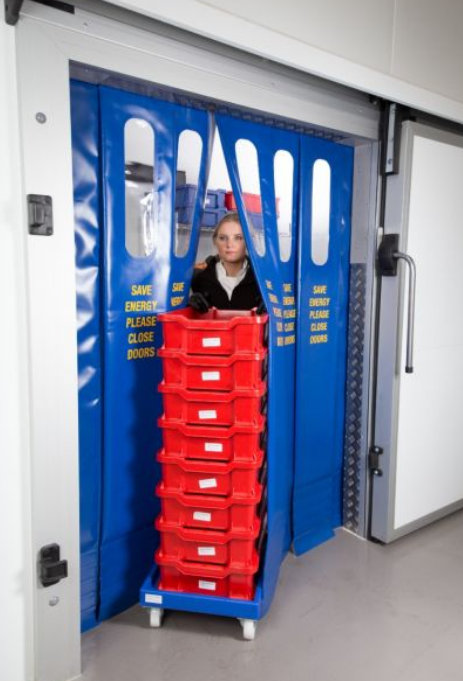

Your cold room door is one of the hardest-working parts of your site. It opens and closes hundreds of times a day, separates chilled air from warm, and protects stock worth thousands of pounds. When it starts to fail, the damage rarely announces itself. It shows up gradually, in higher energy bills, more maintenance calls and stock that doesn't last as long as it should.
If you manage a supermarket, warehouse, food production site or commercial kitchen, here are seven signs your cold room doors could be costing you money every single day.
1. Your energy bills keep creeping up
Refrigeration is one of the biggest energy costs for any temperature-controlled site. If your bills are rising and nothing else has changed, look at the doors first.
A worn or poorly insulated door lets cold air escape and warm air in. Your refrigeration system then works harder and longer to compensate. Over a year, that extra load adds up to a significant and entirely avoidable cost.
2. You can see (or feel) cold air escaping
Stand near your cold room entrance. Can you feel a chill spilling into the corridor or loading area? Can you see mist or condensation when the door opens?
Gaps around the frame, damaged seals and doors that don't close fully are all common culprits. Escaping cold air is money leaving the building, and it makes the surrounding area colder and less comfortable for your team too.
3. Ice is building up around the door
Frost and ice around the frame or threshold are a classic warning sign. They usually mean warm, moist air is getting into the cold room and freezing on contact.
Ice isn't just a nuisance. It can make doors stick, create slip hazards for staff and force your evaporators into more frequent defrost cycles, which uses even more energy. Persistent ice build-up almost always points to a sealing or insulation problem worth fixing.
4. Doors are left open or propped open
If staff wedge the door open because it's heavy, slow or awkward, you have a design problem, not a discipline problem. Every second a cold room door stands open, temperature stability is compromised.
Doors that are difficult to operate encourage bad habits, especially during busy periods with trolleys, pallets and forklifts. Doors that open easily and return to the closed position automatically remove the temptation altogether.
5. Your stock is spoiling or temperatures fluctuate
Inconsistent temperatures are among the costliest consequences of a failing door. Fluctuations can shorten shelf life, cause spoilage and put food safety compliance at risk.
If your logs show frequent temperature spikes, or you're writing off more stock than you should, don't assume the refrigeration plant is at fault. A door that can't hold the temperature difference will undermine even the best system.
6. Maintenance and repair costs are mounting
Cold room doors that are damaged, misaligned or worn out need constant attention: patched seals, replacement hinges, emergency call-outs and time lost while repairs are carried out.
If you're repairing the same door repeatedly, the cost of keeping it going may already exceed the cost of replacing it. Doors built for heavy, high-traffic use, with robust materials and hardware, cut the cycle of repeated repairs and unplanned downtime.
7. The door doesn't suit how your site actually works
Sometimes the door isn't broken; it's just wrong for the job. A door that suited your operation five years ago may not cope now. Traffic may have increased, you may have moved to forklift or trolley access, or hygiene and safety requirements may have tightened.
Using the wrong type of door leads to wasted energy, damaged doors and frustrated staff. The right solution depends on how often the door is used, what passes through it and the temperature you need to maintain.
So what's the fix?
The good news is that most of these problems are solvable with a door designed for temperature-controlled environments. Here are the main options.
The K750 Energy Door. Designed specifically for temperature-controlled areas, the K750 Energy Door combines thermal efficiency with flexibility, delivering performance and safety benefits across a wide variety of applications. They swing open easily in either direction and return to closed, helping to keep cold air where it belongs without relying on staff to shut them
Insulated strip curtains. For openings with frequent traffic, insulated strip curtains offer a practical way to reduce temperature loss while allowing easy passage for people and equipment. For more on strip options, visit our sister company, PVC Strip Doors.
Custom-built solutions. Every site is different. Kenfield's door configurator lets you specify a door that suits your exact opening and operating conditions.
Why choose a specialist manufacturer?
Choosing a specialist over a general supplier matters. Kenfield designs and builds doors in Birmingham for some of the UK's biggest retailers and food businesses, and holds ISO 9001 (Quality) and ISO 14001 (Environmental) accreditation. Its work has also been recognised with industry awards, including Refrigeration Product of the Year.
That experience means doors that are configured to your application rather than forced to fit, and advice from a team that understands cold storage, retail, hospitality and warehousing environments.
Self-check: how many did you tick?
Run through this checklist on your next site walk:
-
Rising energy bills with no obvious cause
-
Cold air escaping when the door opens
-
Ice or frost around the frame
-
Doors propped or left open
-
Temperature fluctuations or stock spoilage
-
Frequent repairs and call-outs
-
A door that no longer suits your operation
If you ticked even two or three, it's time to take a closer look. A door upgrade is often one of the quickest, most practical ways to cut waste, protect stock and make life easier for your team.
Stop the daily drain
Your cold room door should be saving you money, not costing you it. Spotting these warning signs early lets you fix the problem before it turns into higher bills, lost stock or an emergency replacement.
Ready to find the right door for your site? Contact the Kenfield team on +44 (0)121 451 3051 or use the door configurator to get started.
