
Insulated Strip Curtains vs. the K750 : Which One Actually Saves You More Energy?
-
November 16th, 2026
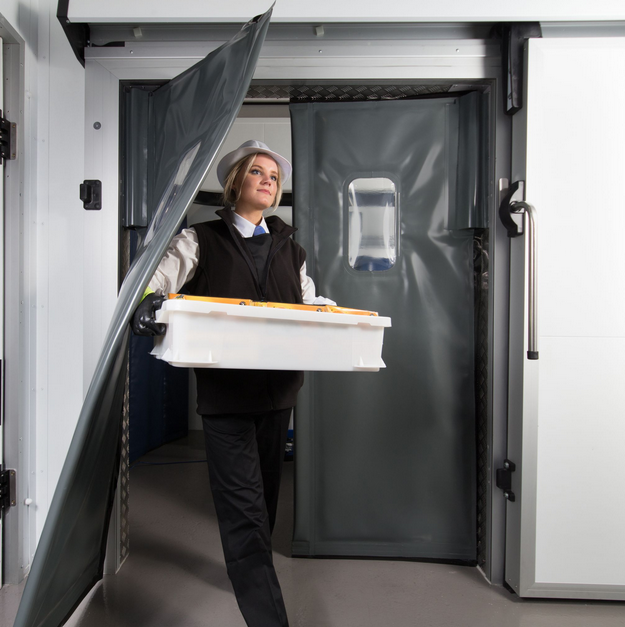
If you run a cold room, chiller or freezer, you already know that every time the door opens, cold air escapes and warm air rushes in. Your refrigeration then works harder to recover, and your energy bill climbs.
Two solutions dominate the conversation: Insulated strip curtains and the K750. Both reduce temperature loss, and both are far better than leaving an opening unprotected. But which one saves you more energy? The honest answer is that it depends on how your site operates. Here's how to decide.
How each option works
Insulated strip curtains are made of overlapping flexible strips hung across an opening. People, trolleys and vehicles push through them, and the strips fall back into place behind. They are simple, adaptable and quick to install. Kenfield's K2 Insulated Strip Door Curtain is an insulated strip curtain designed for temperature-controlled areas.
Flip-flap doors (K750) are flexible swing doors that open in both directions when pushed, then return to a closed position. They provide a more solid barrier than strips and are designed for spaces with regular traffic. Kenfield's Coldroom Flip-Flap Doors include the K750 Energy Door, an insulated flexible swing door in polyurethane (PU) or PVC, designed to save energy in temperature-controlled environments.
Where flip-flap doors win on energy
For most cold rooms, flip-flap doors have the edge on thermal performance, for a few reasons.
A tighter seal. A flip-flap door closes as a solid leaf, so there are no gaps between strips for air to pass through. Even the best strip curtain has small openings where the strips overlap or where they move after use. Over thousands of openings, that leakage adds up.
Better insulation. Insulated flip-flap doors are built to slow heat transfer, which means less warm air reaches the cold room and less cold air escapes. That directly reduces the load on your refrigeration system.
Quick, reliable recovery. Because the door swings back closed each time, it restores the barrier straight away without relying on staff to do anything.
Better temperature stability. A more consistent internal temperature means less strain on equipment and better protection for stock.
If your priority is squeezing the most energy efficiency from a cold room, particularly a chiller or freezer with steady daily use, a flip-flap door is usually the stronger choice.

Where Insulated strip curtains make sense
Strip curtains aren't the poor relation. In the right setting they are an excellent, cost-effective option.
Very high traffic. In busy loading bays or corridors where forklifts, pallet trucks and people pass constantly, strips let traffic flow through without slowing anyone down.
Wide or awkward openings. Strip curtains are easy to configure for larger or tight openings where a swing door isn't practical.
Lower upfront cost. Strips typically cost less to buy and are quick to fit, which can matter for tight budgets or temporary needs.
Easy part replacement. If a strip is damaged, you can often replace it individually rather than the whole curtain.
Ambient and semi-controlled spaces. For separating areas in warehouses, production zones or loading bays where a perfect thermal seal isn't essential, strips can be all you need.
For more on strip options, visit Kenfield's sister company, PVC Strip Doors, or explore the PVC strip door range.
Don't forget the hidden factors
Energy savings on paper only matter if they hold up in daily use. Our specialists suggest weighing up these points too.
How often is the opening used? The more traffic, the more important a fast-closing, well-sealing door becomes.
What passes through? Pedestrians, trolleys and forklifts all put different demands on a doorway. Heavy vehicle traffic may favour strips, or a flip-flap door with the right protection.
How cold is the room? A freezer has a much bigger temperature difference to manage than a chiller, so sealing and insulation matter more.
What are your hygiene needs? Food environments may need doors and strips that are easy to clean and suited to the regulations you work under. Our guide to choosing the right food hygiene door is a useful starting point.
Condition matters more than type. A neglected strip curtain with missing or worn strips can lose more energy than no curtain at all. Worn flip-flap doors with damaged seals or misaligned panels suffer the same problem. Regular inspection is essential either way.
Can you use both?
Yes, and many sites do. A common approach is a flip-flap door at the main cold room entrance for maximum thermal performance, with strip curtains used elsewhere, such as at loading bays, between zones or in busy secondary openings. Combining them lets each door do what it does best.
So, which one saves more energy?
For most temperature-controlled rooms, an insulated flip-flap door will save more energy than a strip curtain, thanks to a tighter seal and better insulation. But strip curtains remain a smart, cost-effective choice for high-traffic or wide openings where a swing door isn't practical.
The best answer is the door that suits how your site really works, and that's where specialist advice pays off. If you want to understand what your current doors might be costing you, our post on signs your cold room door is costing you money is a handy checklist.
Find the right solution for your site
Kenfield has been designing and manufacturing doorway solutions for the cold chain for over 40 years. Whether you need flip-flap doors, insulated strip curtains or something bespoke, our team can recommend the option that balances energy savings, traffic flow and budget. You can also use our door configurator to specify a door for your exact opening.
Explore our refrigeration door solutions or contact the Kenfield team on +44 (0)121 451 3051 for expert advice.
